Brake Pads: The Most Critical Safety Component for Fleets
- Share
- Issue Time
- Feb 20,2026
Summary
How brake pads protect fleets, prevent accidents, and reduce downtime across every route.
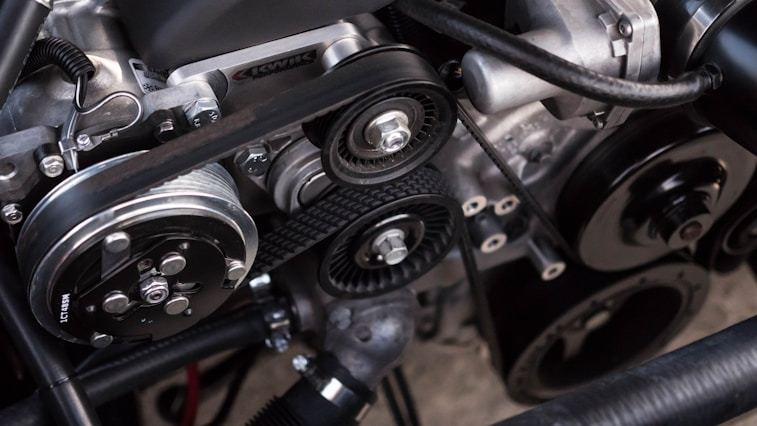
When a fleet manager reviews the maintenance budget each quarter, brake pads rarely top the conversation. Tires, oil, filters, and telematics subscriptions all demand attention, yet it is the humble brake pad that quietly decides whether every truck, van, and delivery car on the roster makes it back to the depot in one piece. For commercial fleets running thousands of stops a week, brake pads are not just another line item; they are the single most critical safety component on the vehicle. A worn pad can extend stopping distance by tens of meters, fade on a long downhill grade, or fail outright under load — and the consequences ripple from a single accident into liability claims, lost contracts, driver turnover, and brand damage that takes years to undo.
Understanding how brake pads work, why they wear, and how to choose the right formulation for each route profile is therefore a fleet-safety priority, not a purchasing detail. This guide explains the engineering, the failure modes, and the procurement strategy that fleet operators should adopt in 2026 to keep every vehicle — and every driver — protected.
Why Brake Pads Are the First Line of Defense
A brake pad is the friction material that clamps against a spinning disc (rotor) and converts the kinetic energy of a moving vehicle into heat. In a 3,500 kg delivery truck traveling at 90 km/h, the energy involved is roughly 1.2 million joules per stop. The pad absorbs this energy, sheds it as heat, and returns to a stable operating temperature without glazing, cracking, or fading. No other component on the vehicle performs this thermal-mechanical work repeatedly, hour after hour, in every weather condition. Tires transmit grip; the ABS modulator controls pressure; but the pad is the actual interface where motion becomes still. If the pad fails, every other safety system downstream is irrelevant.
The Real Cost of a Skipped Pad Replacement
Fleets that push pads past their useful life often do the math on the part itself — a $25 to $80 saving per axle — and ignore the cascade. Once a pad wears through to the backing plate, the steel backing contacts the cast-iron rotor. In less than a mile of driving, the rotor surface can be scored beyond machining tolerance. A rotor that should have lasted two pad cycles must now be replaced, multiplying the per-axle cost by four or five. Worse, a sudden loss of braking on a loaded vehicle almost always triggers a chain-reaction collision with severity that dwarfs any parts budget. Insurance deductibles, vehicle downtime during investigation, and CSA/DOT out-of-service orders compound the true cost of "saving" a pad.
Heat, Fade, and the Physics of Failure
Brake fade is the temporary loss of stopping power that occurs when friction material overheats. Organic pads begin fading around 300 °C; semi-metallic pads tolerate 450 °C; ceramic compounds can perform to 600 °C and beyond. On a mountain pass, a fully loaded box truck descending for ten minutes can easily generate rotor temperatures of 500 °C at the friction surface. A pad that cannot manage this heat will gas out — releasing volatile compounds that create a vapor layer between the pad and rotor — and the driver will feel the pedal go soft with no warning. For fleets operating in hot climates, on hilly routes, or carrying heavy payloads, selecting a pad with adequate continuous operating temperature is non-negotiable.
Material Choices for Fleet Duty Cycles
Fleets typically choose between three pad families. Organic (NAO) pads are quiet, gentle on rotors, and cheap, but they wear fastest and tolerate the least heat — suitable only for light-duty last-mile vans in mild climates. Semi-metallic pads mix iron, copper, and steel fibers into the friction compound; they handle higher temperatures and last longer, at the cost of more rotor wear and slightly more noise. Ceramic pads use a denser, more stable compound that resists fade, produces minimal dust, and runs quieter — ideal for executive shuttles and passenger fleets where cabin cleanliness and brand image matter. Many large fleets standardize on a semi-metallic front pad and a ceramic rear pad to balance safety, longevity, and rotor life across mixed duty cycles.
Recommended Brake Components from OOZOM
OOZOM supplies OE-grade brake components engineered for the Asian commercial vehicle market, including Bestune, Maxus, MG, Wuling, Changan, and Great Wall platforms that dominate last-mile and light-commercial fleets. The following components have proven durability under real-world fleet duty:
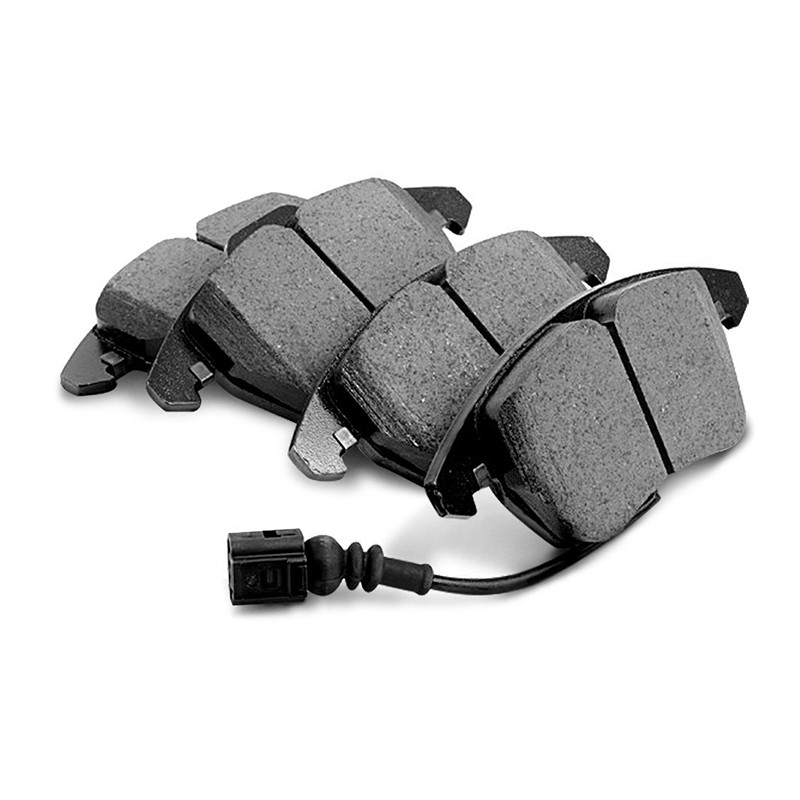
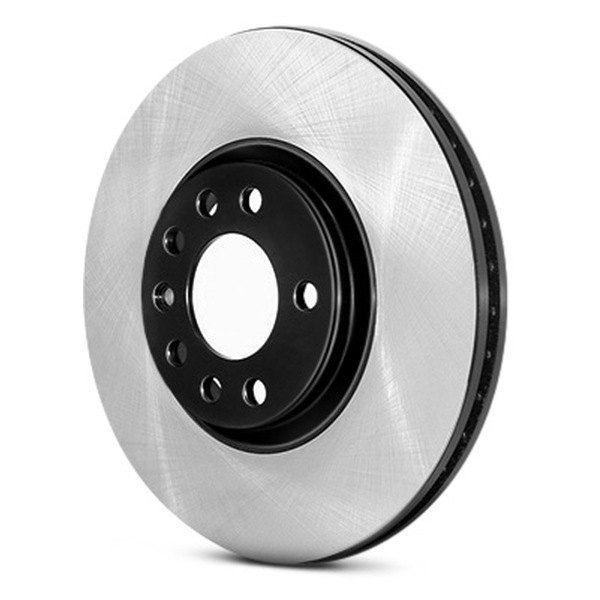
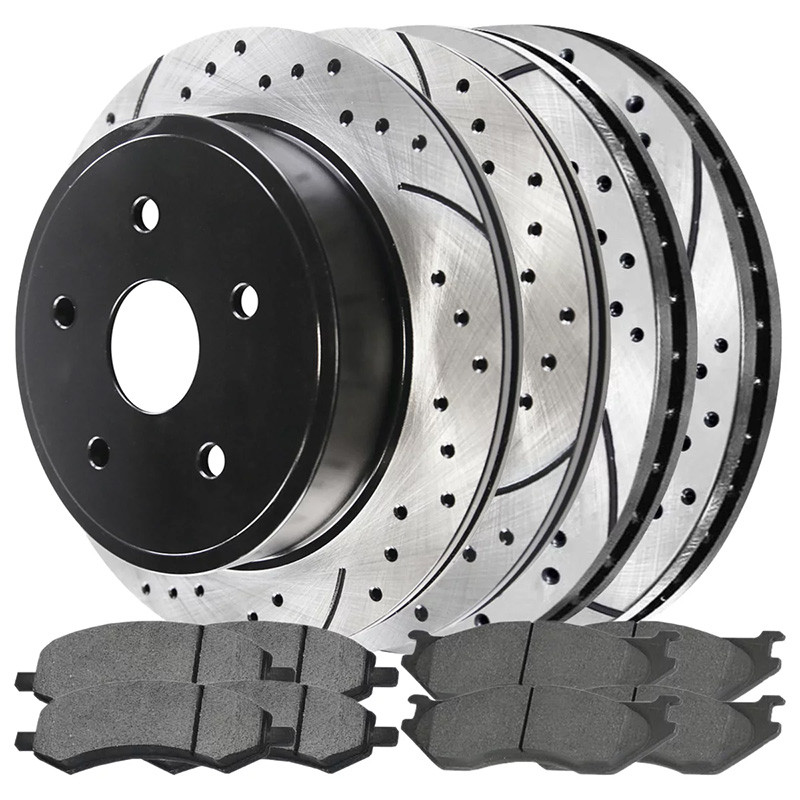
Pairing matched pads with quality rotors is the single best way to extend service intervals and reduce warranty exposure across a fleet.
Inspection Intervals and Predictive Replacement
Most fleets inspect pads at every oil change, which is too infrequent for high-cycle vehicles. A brake pad inspection every 10,000 km — or every three months, whichever comes first — catches uneven wear, caliper sticking, and pad separation before they become failures. Modern telematics adds another layer: vehicles that repeatedly trigger hard-braking events or ABS intervention should be flagged for accelerated pad inspection, because aggressive driving cycles wear pads up to three times faster than the fleet average. Building a brake-wear KPI into the maintenance dashboard, alongside tire pressure and oil life, gives fleet managers a predictive view of upcoming pad demand and lets procurement bulk-order at the best price.
Driver Behavior and Pad Longevity
The cheapest way to extend brake life has nothing to do with the part itself. Coaching drivers to anticipate traffic, coast to red lights, and use engine braking on descents can double pad life in some fleets. A driver who follows at eight car lengths instead of two uses the brakes a fraction as often. Pairing brake-friendly routing in the dispatch software with monthly driver-scorecard reviews creates a feedback loop that pays for itself within a quarter. The pads last longer, the rotors stay cooler, fuel economy improves, and accident rates drop — all from the same training investment.
Procurement Strategy: Stockpile, Don't Scramble
When a vehicle is grounded for a missing $40 pad, the downtime alone can cost $300 to $800 per day in lost revenue. The smartest fleets maintain a rolling pad inventory sized to cover 120 days of expected consumption, ordered on quarterly contracts with locked pricing. Standardizing pad specifications across the fleet — same friction code, same thickness, same hardware kit — reduces SKUs, simplifies technician training, and unlocks volume pricing. OOZOM supports bulk orders with consistent OE-spec quality across the Bestune, Maxus, MG, and other major commercial platforms, making it straightforward to standardize a mixed fleet under one supplier.
Documentation, Compliance, and CSA Scores
Regulators in most markets treat brake condition as a top-weighted inspection item. In the United States, the CVSA's Vehicle Maintenance Reporting Standards assign brake systems the highest defect severity rating; a pad worn below 2 mm typically results in an out-of-service order. Keeping digital records of every pad replacement — date, vehicle, odometer, technician, part number — protects the fleet during audits and supports any post-incident investigation. A documented preventive maintenance program also reduces liability in the event of a collision, demonstrating that the operator met or exceeded industry standards of care.
Final Word: Treat Pads as a Safety System, Not a Commodity
Brake pads are easy to overlook because they are small, inexpensive, and invisible until they fail. That invisibility is exactly why they belong at the top of every fleet safety review. A disciplined program — frequent inspection, matched OE-quality components, driver coaching, predictive replacement, and audited documentation — turns brake pads from a recurring expense into a safety system that protects drivers, vehicles, cargo, and the company's reputation. In 2026, with route density increasing and driver shortages forcing longer hours behind the wheel, no fleet can afford to treat brake pads as just another commodity part.